

How Managed Protective Intelligence Services Utilize the Human Element

Security teams have access to more data than ever before. Automated alerts, behavioral analytics, risk feeds, digital monitoring platforms, and other tools can quickly surface unusual activity.
But identifying an indicator is not the same as understanding what it means.
A hostile online comment may be routine criticism, coordinated harassment, or the early sign of a more serious concern. A travel alert may have little relevance to one executive but immediate operational significance for another. Exposed personal information may appear harmless until it is connected to a residence, family member, or recurring routine.
Managed protective intelligence combines technology-enabled collection with experienced human analysis. Technology provides speed and reach. Analysts provide context, judgment, and operational relevance.
Why Technology Alone Is Not Enough

Automated systems are effective at processing large volumes of information and flagging activity that meets predefined criteria. They can identify:
- Leaked credentials.
- Changes in online sentiment.
- References to an executive or organization.
- Unusual account behavior.
- Civil unrest or transportation disruption.
- Publicly exposed personal information.
These capabilities are valuable, but automated tools have limitations.
A platform may detect increased negative commentary without determining whether it reflects ordinary dissatisfaction, persistent fixation, impersonation, or a potential physical-security concern. It may identify unrest near a destination without understanding whether the disruption affects a particular route, hotel, venue, or executive itinerary.
The challenge is not simply collecting information. It is determining which information matters.
Human analysts help answer questions that automated systems cannot resolve reliably:
- Is the source credible?
- Is the activity isolated or part of a pattern?
- Does the subject demonstrate access, intent, or capability?
- Who or what may be affected?
- Does the concern require escalation?
- What response would be appropriate without creating unnecessary disruption?
These judgments turn raw information into intelligence that security teams can use.
Context Changes the Meaning of an Indicator
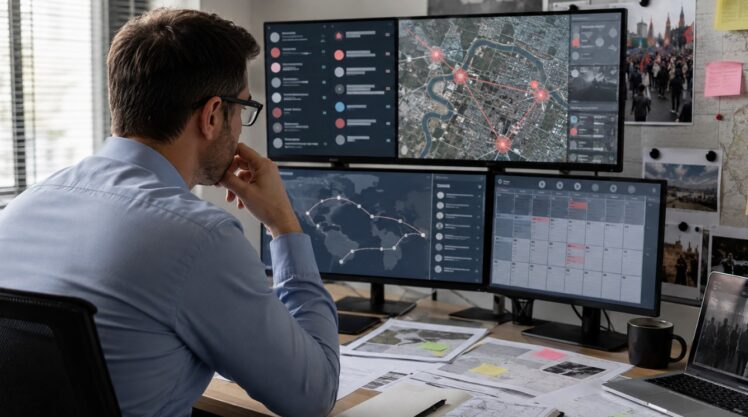
An isolated indicator may have little significance. The same indicator, viewed alongside additional information, may deserve closer attention.
Consider a hostile social-media post directed at an executive. On its own, it may be little more than angry commentary. The assessment changes if the individual repeatedly references the executive, identifies a private address, discusses an upcoming appearance, or attempts to contact family members.
The same principle applies to travel risk.
A demonstration in another country may have no effect on a company’s leadership. It becomes operationally relevant when an executive is scheduled to travel through the affected area, road access is limited, or the company itself is connected to the underlying dispute.
Human analysis connects these details across online activity, physical locations, travel plans, reputation, and current events.
Monitoring identifies that something happened. Analysis explains why it may matter.
Human Judgment Supports Better Responses
Protective intelligence should not treat every warning signal as a crisis.
Overreaction can create alert fatigue, waste resources, interfere with executive mobility, and reduce confidence in the security function. Underreaction can leave meaningful risks unaddressed.
Analysts help security teams calibrate the response to the credibility and significance of the concern.
Depending on the circumstances, recommendations may include:
- Continuing observation while additional information is gathered.
- Briefing an executive, family office, or corporate security team.
- Adjusting a travel route, schedule, or venue.
- Reviewing exposed personal information.
- Increasing protective coverage for a specific event or period.
- Coordinating with legal, communications, human resources, or law enforcement.
- Closing the matter when available evidence does not justify escalation.
The appropriate response depends on context. A direct and credible threat requires a different approach from generalized criticism, routine data exposure, or a temporary transportation disruption.
The Human Element Extends Across Risk Areas
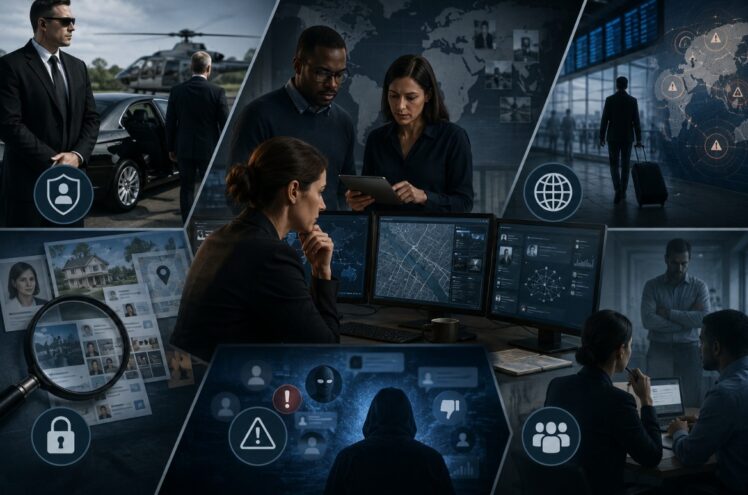
Human analysis is relevant across the broader protective-intelligence landscape.
Executive protection
Analysts can identify developments that may affect a principal’s safety, movements, public appearances, or daily routines. Their assessments help protective teams determine when additional measures may be appropriate.
Travel and geopolitical risk
General alerts often lack the detail needed for a specific executive or itinerary. Human analysis connects changing local conditions to routes, venues, operating requirements, and contingency options.
Privacy exposure
Public records, social-media activity, property information, and professional profiles can reveal more than intended. Analysts examine how separate data points may combine into an actionable picture.
Reputational and online threats
Not all negative commentary presents a security concern. Analysts help distinguish routine criticism from coordinated harassment, impersonation, disinformation, or behavior that may have physical or operational implications.
Workplace and insider concerns
When handled through appropriate legal, security, and human-resources processes, analyst judgment can help evaluate available indicators without assuming that unusual behavior automatically represents malicious intent.
Red5 Security provides managed protective intelligence services that combine technology-enabled collection with human-led threat assessment and practical guidance for executive and corporate security teams.
The value lies not in generating more alerts, but in helping decision-makers understand which developments require attention.
Analysts Provide Continuity
Threats and vulnerabilities often develop gradually.
A single incident may not justify escalation. Several related events over time may form a more meaningful pattern. Analysts who understand the principal, organization, operating environment, and prior history are better positioned to recognize that change.
Managed services provide continuity by preserving context across time. Analysts can compare new information with earlier activity, assess whether behavior or conditions are escalating, and help reduce gaps between corporate security, executive protection, family offices, legal counsel, communications teams, and senior leadership.
This continuity is particularly important when information is fragmented across multiple systems or departments.
Turning Information Into Decision Support
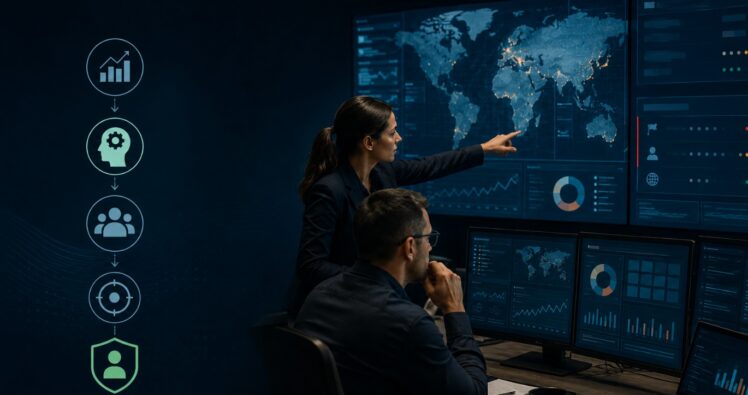
The value of managed protective intelligence is not measured by the volume of data collected or the number of alerts produced.
It is measured by the quality of the decisions the intelligence supports.
Technology provides scale, speed, and visibility. Human analysts provide interpretation, prioritization, and judgment. Together, they help organizations identify meaningful concerns earlier, allocate resources more effectively, and respond in a way that reflects the actual risk.
Security decisions affect real people, business priorities, and complex operating environments. Those decisions require more than an automated threshold.
They require an understanding of credibility, relevance, consequence, and context.
That is the human element managed protective intelligence brings to the security process.